
Last updated November 16, 2026
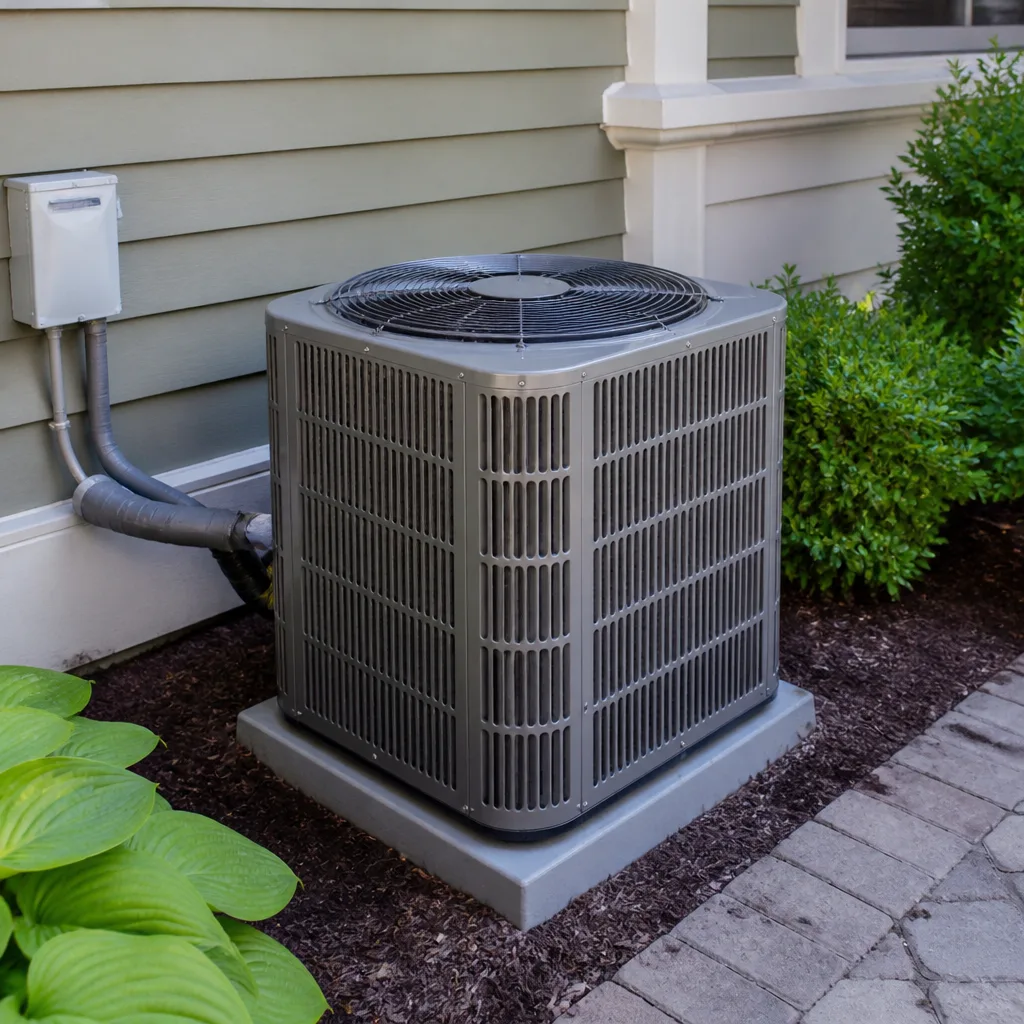 AC repair
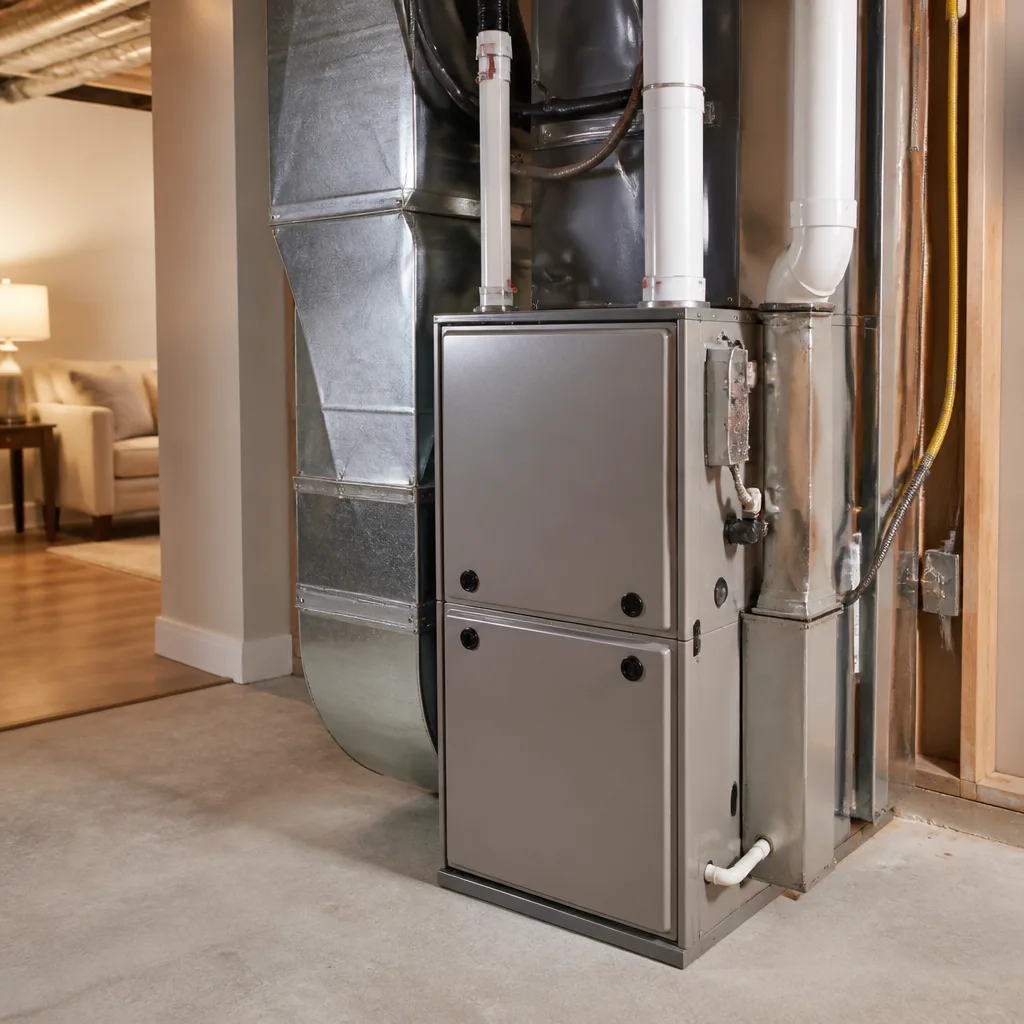 Furnace & heating
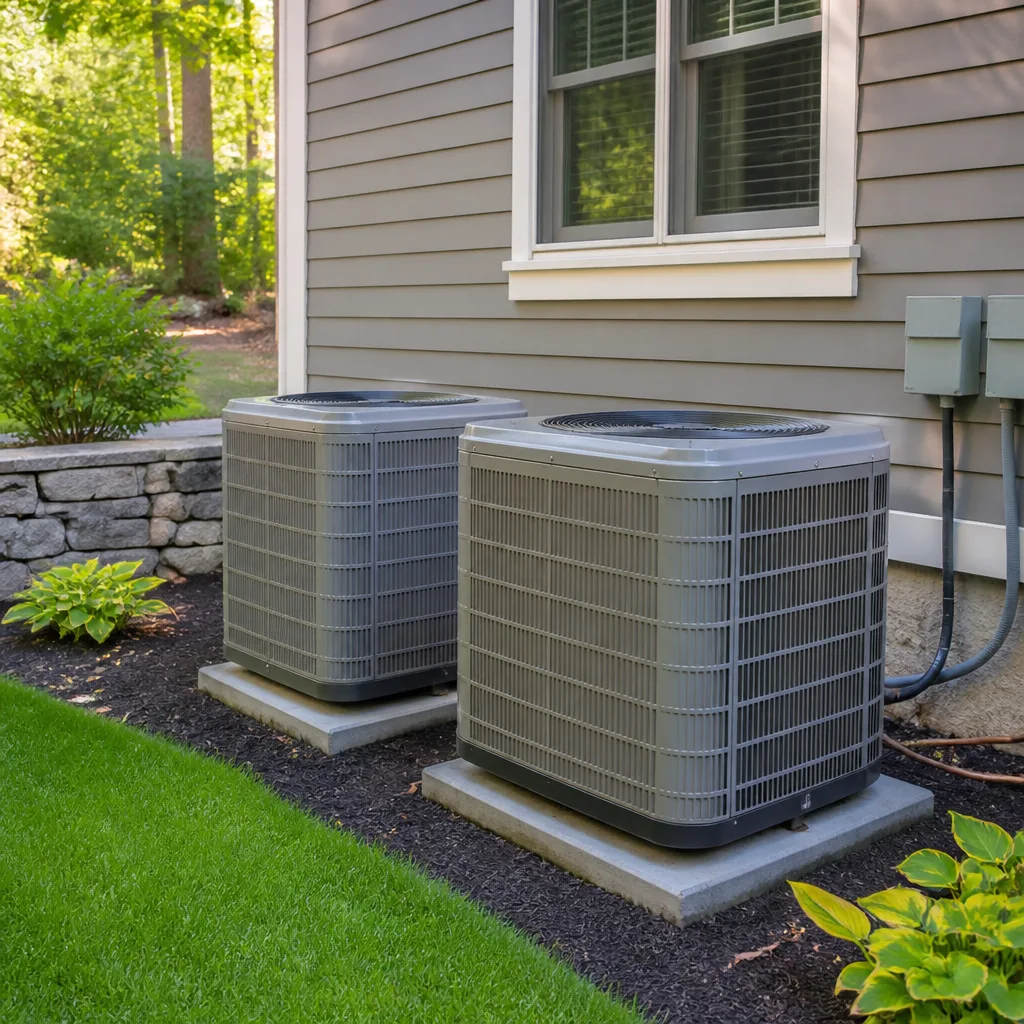 Heat pumps
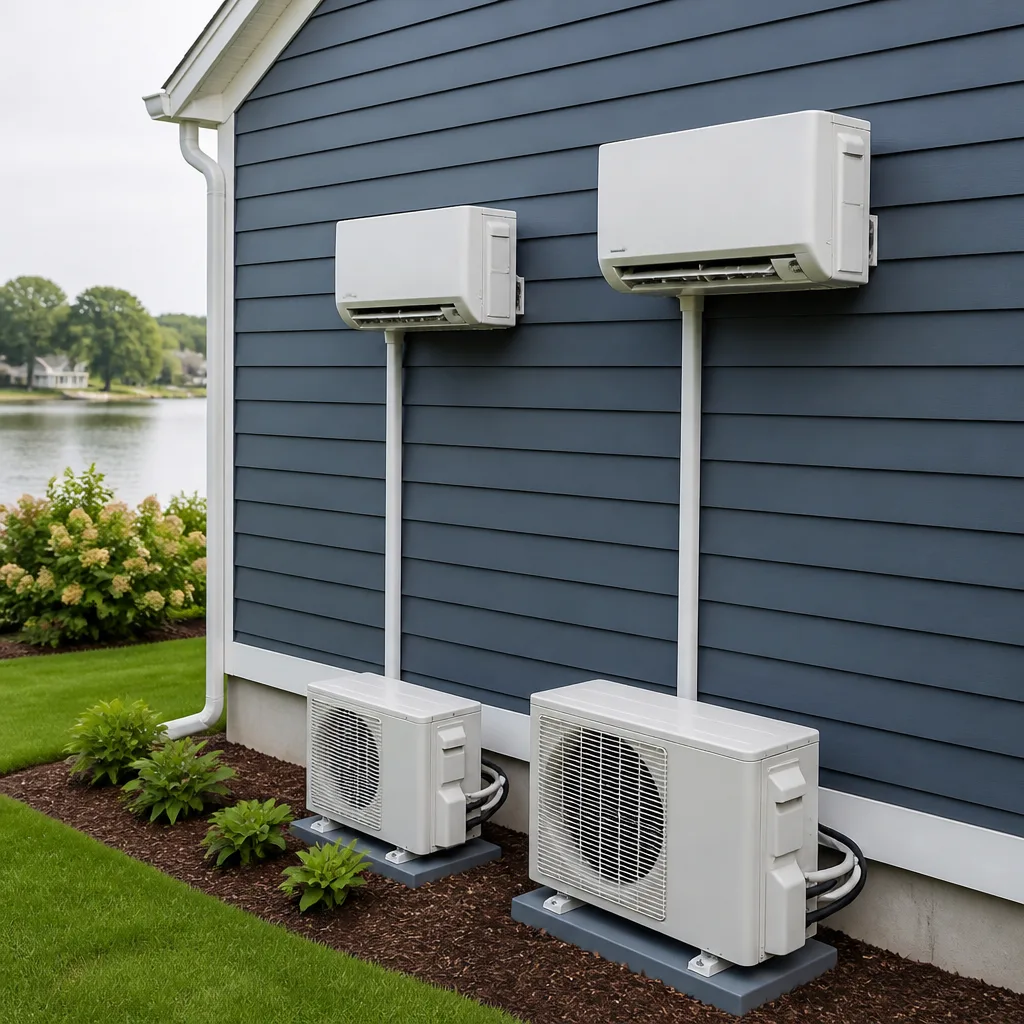 Ductless mini splits
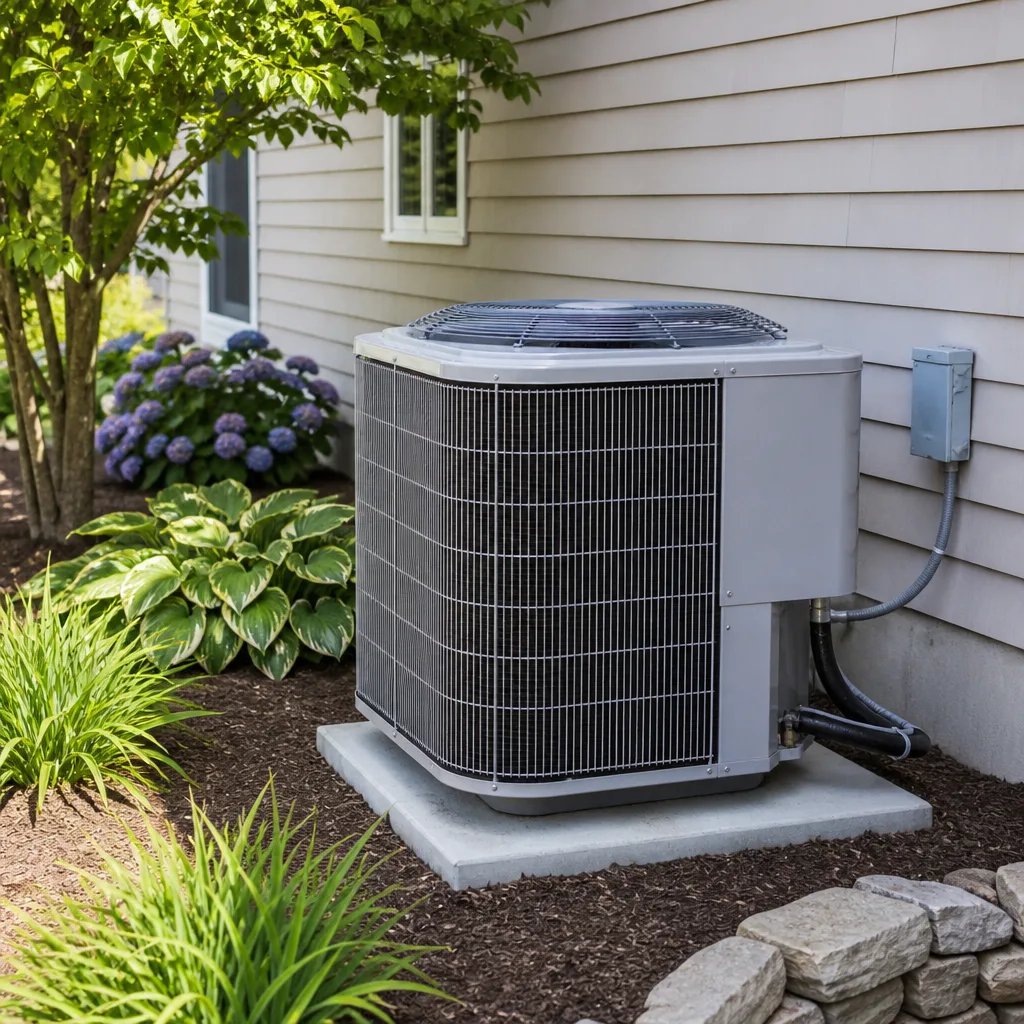 Carrier
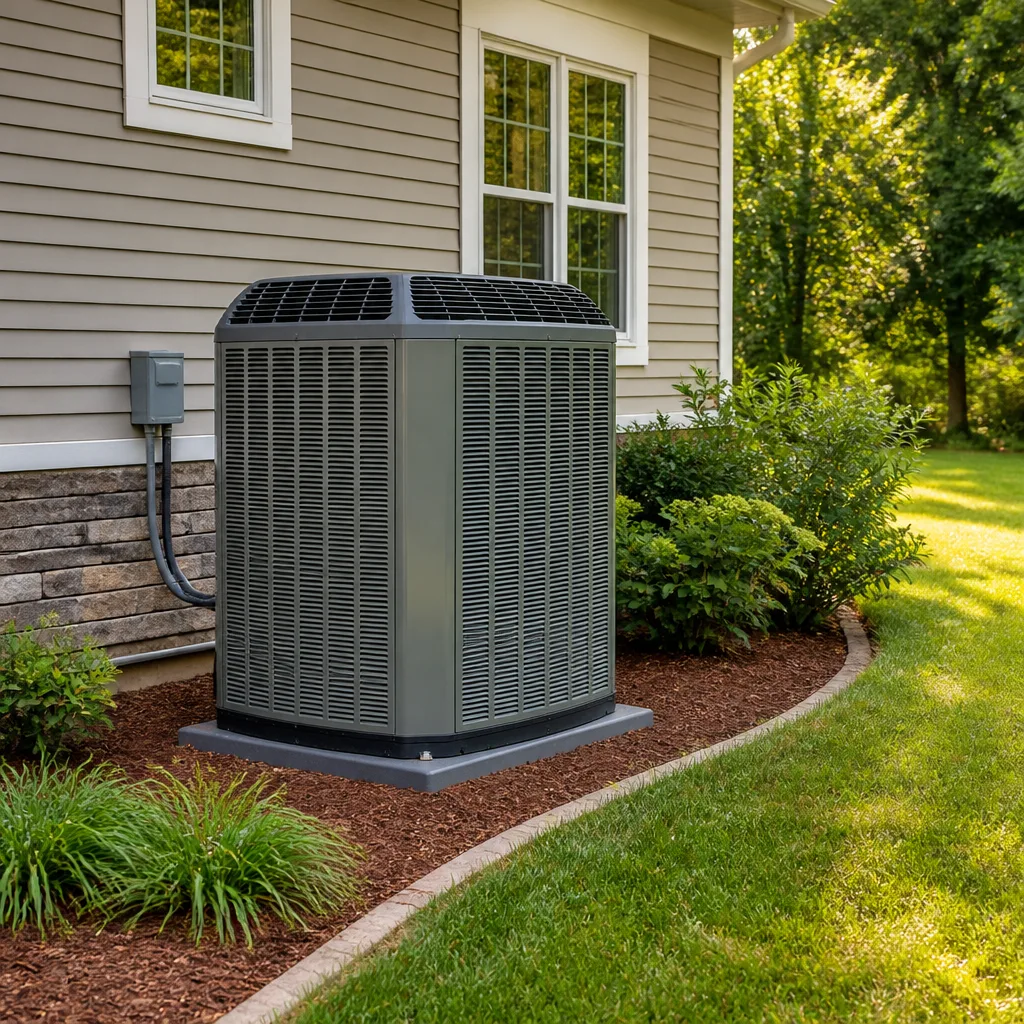 Trane
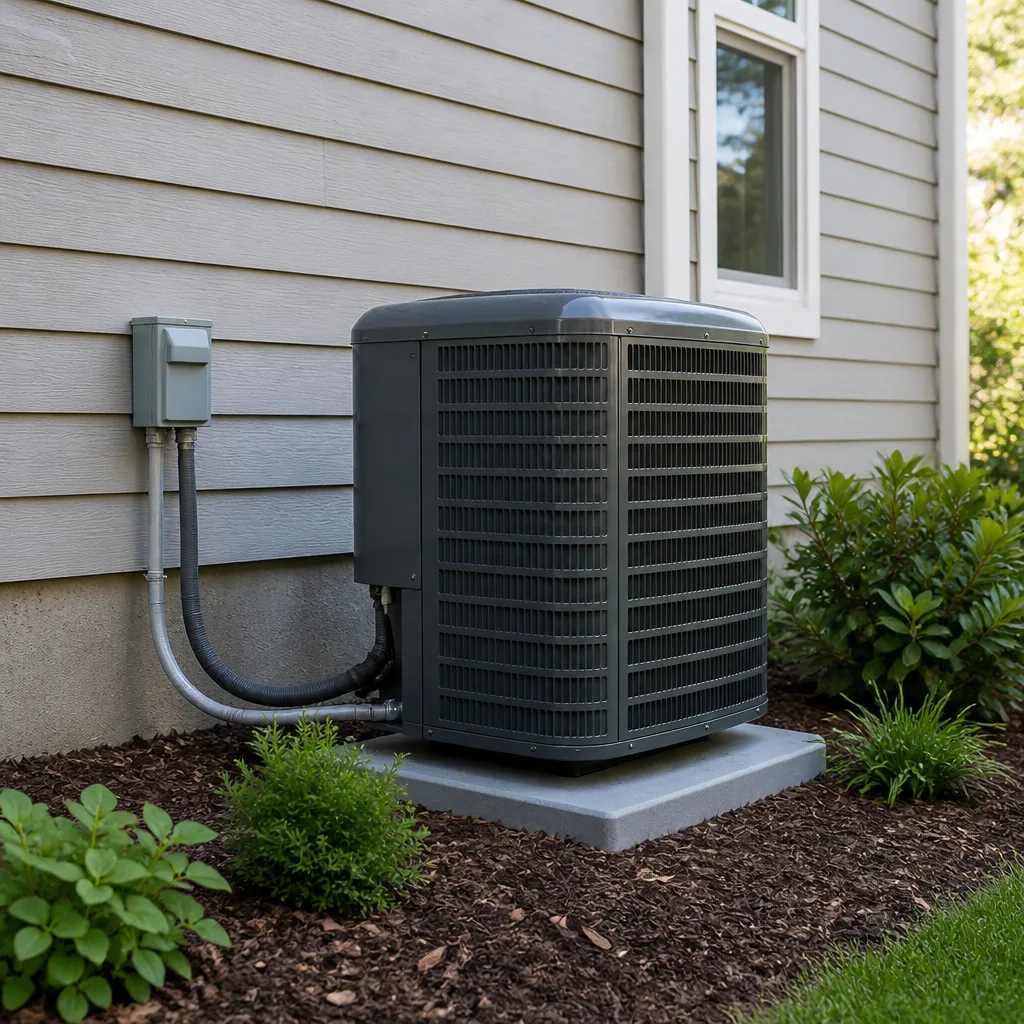 Goodman
Seasonal tune-up and full diagnostic on your Carrier, Trane, or Goodman system - readings shown to you before any repair is proposed
Diagnosis first, numbers second - you approve the repair price before a single part goes in.
Get your free estimateHVAC Emergency Preparedness Guide for San Mateo Homes
The counterintuitive truth about HVAC emergencies in San Mateo is that the emergency usually starts before your system fails. It starts the day you realize you don’t know your furnace’s model number, where its breaker sits, or who you’d actually call if it quit on a cold January morning. That missing information adds hours to every diagnosis. Read this guide and you’ll have a documented system profile, a first-30-minute triage sequence for a failed AC or heater, a realistic picture of what emergency HVAC service means in San Mateo’s contractor market, and a plan for managing indoor temperatures safely while you wait.
Quick Answer
When your HVAC system fails in San Mateo, the first 30 minutes decide whether you’re looking at a 4-hour fix or a 48-hour wait. Turn the system off, check the breaker and thermostat, write down the model number of both your indoor and outdoor units, and call a specialist early. If the phone rings during a heat event, book a technician before you finish troubleshooting. We answer 24/7, and fast dispatch from 7am to 7pm Sunday through Friday covers the rest.
Styles & brands we work with
- AC repair
- Furnace & heating
- Heat pumps
- Ductless mini splits
- Carrier
- Trane
- Goodman
Table of Contents
- The System Documentation Checklist Every San Mateo Home Should Have
- The First 30 Minutes: A Triage Sequence for a Failed AC or Heater
- Managing Indoor Temperatures During an Outage in San Mateo’s Climate
- What “Emergency HVAC Service” Really Means in San Mateo
- The Two Failure Scenarios That Damage Secondary Systems
- Heat Pump Failures During Diablo Wind Events
- Heating Outages During a Coastal Cold Snap
- Annual Prep: What to Do Between Emergencies
The System Documentation Checklist Every San Mateo Home Should Have
Diagnostic time is the hidden cost of every HVAC emergency. When a technician walks in and already knows the model, refrigerant type, system age, breaker location, and whether the unit is under warranty, the visit moves from “inspection” straight to “repair.” In our experience across San Mateo homes, a complete system profile cuts diagnostic time roughly in half. That’s less time on the meter and a faster path to a working system.
Many San Mateo homes have specific equipment quirks worth documenting. Older homes near Central Park and Hayward Park often have wall furnaces or floor furnaces that predate central HVAC. Homes built in the decades when heat pumps became common on the Peninsula often run a Goodman, Rheem, York, or Daikin unit that’s been serviced by more than one contractor. The model plate tells the story. Find it once, photograph it, and you’ll never have to guess again.
What to Record
- Outdoor unit model and serial number. Photograph the metal data plate on the side of the condenser. Include the brand and the model.
- Indoor air handler / furnace model and serial. Usually a label inside the blower compartment door or on the cabinet side.
- Refrigerant type. Listed on the same data plate: R-22, R-410A, or R-454B. This determines what a technician can legally recharge.
- Filter size and location. Write down the dimensions. A wrong-size filter is one of the most common causes of restricted airflow and short cycling.
- Circuit breaker panel and the specific breaker. Note which panel (main or subpanel) and which breaker controls the outdoor unit and the indoor unit. Label the breaker if it isn’t labeled.
- Thermostat brand and model. Note whether it’s a smart thermostat and whether the app login is stored somewhere you can find it.
- Warranty contacts and install date. Pull the paperwork or look up the install record. Know the manufacturer’s number and whether the warranty transfers.
- Prior service records. Any diagnosis, repair, or refrigerant recharge in the past few years belongs in the folder.
Keep the whole thing in a single paper folder in a kitchen drawer or a shared digital note. And when you call, the first thing we ask is what brand of equipment you have. Knowing you own a Rheem furnace before we arrive means the call is scheduled with the right parts list. Diagnostics start earlier, and the thermostat gets back to normal sooner.
The First 30 Minutes: A Triage Sequence for a Failed AC or Heater
The instinct to call immediately is correct in a heat wave or cold snap. But the handful of steps below take minutes, cost nothing, and give the technician useful information. Do them in order, and note what you find. If your home has no cooling and the indoor temperature is climbing past 85°F, or no heat and the indoor temperature is dropping below 60°F, skip to the call.
Step-by-Step Triage
- Check the thermostat first. Confirm it’s set to COOL or HEAT, the setpoint is actually below or above room temperature, and the fan is set to AUTO, not ON. A thermostat set to fan-only will run the blower but not the compressor or burner.
- Look at the breaker. Trip a breaker back to ON once. If it trips again immediately, stop. That’s an electrical fault the system is trying to protect you from. Do not reset a breaker that keeps tripping.
- Check the filter and the return. A clogged filter or a blocked return grille can overheat a furnace on limit or freeze an AC coil. Replace or clean the filter before assuming something more serious.
- Listen at the air handler. A running blower with no heat or cool coming out points to a different problem than a dead blower. Note the difference.
- Look at the outdoor unit. Is the fan spinning? Is there ice on the refrigerant lines? Is the coil itself frosted? Do not scrape ice off; turn it off and note what you see.
- Smell the air. A burning smell, an electrical smell, or the smell of gas is a stop sign. Turn the system off at the thermostat and call a professional immediately.
- Write down what happened. Time the system was running before it stopped, what it was doing, and whether it made noise. This is the fastest path a technician can take into the repair.
- Call and book. Whether the problem is resolved by triage or not, call a heating and cooling specialist early. A failed AC that’s running hot competes with the whole Peninsula for parts and service during a heat event.
We work on the brand you already have, not just the ones we sell. That matters during triage because a technician who knows Carrier, Trane, Lennox, Goodman, Rheem, York, Daikin, Bryant, and American Standard can recognize failure patterns in the system in front of them without a second visit. If the system is older and the repair is a bad investment, we’ll say so. An honest assessment before any recommendation is the standard.
Managing Indoor Temperatures During an Outage in San Mateo’s Climate
San Mateo’s weather is usually a gift. Summer afternoons run mild, the marine layer pushes fog over the hills in the early morning and retreats by midday, and most homes cool down overnight with nothing more than open windows. That’s a real advantage during an AC outage.
Until it isn’t. When a high-pressure system parks over the Bay Area and the Diablo winds push hot, dry air west off the hills, San Mateo can turn hot fast, and the marine layer doesn’t always arrive. In that scenario, the house heats up and stays hot. Knowing which pattern you’re in tells you how much time you have to manage indoor temperatures before discomfort becomes a real problem.
When the Marine Layer Helps
- Mornings during a mild heat spell. Open windows on the west and shaded sides of the house, close the ones facing the sun. Cool air moves in on its own by early afternoon.
- Overnight in most summer weather. If the overnight low is under 65°F, pull cool air through the house by opening windows at opposite ends. Run the furnace fan in FAN-ON mode if it still works to circulate, then switch back to AUTO.
- Homes near Burlingame, Foster City, and the bayfront. Fog tends to hold longer, so the house gets more help from the marine layer than homes on the western hills.
When the Marine Layer Doesn’t Help
- Diablo wind heat events. The offshore flow kills the fog and drives temperatures up fast. Close windows and blinds during the day, run ceiling fans, and use the coolest room in the house as a base camp. If anyone in the home is older, very young, or has a medical condition affected by heat, that’s the moment to call a professional and get the system fixed.
- Multi-story homes on the west side. Upper floors hold heat longer with no airflow. Consider pulling mattresses downstairs until the system is repaired.
- Cold snaps. If the furnace is down and nighttime indoor temperatures drop below 60°F, close off unused rooms, use extra layers and blankets, and reach out to a specialist for same-day service.
We’re a heating and cooling specialist because we think temperature management isn’t a side job. One call covers your furnace and your AC, no juggling contractors. If you need rapid help during a heat or cold event, our team is reachable 24/7 at (866) 260-3183 and dispatches from 7am to 7pm, Sunday through Friday.
What “Emergency HVAC Service” Really Means in San Mateo
Every HVAC company advertises “emergency service.” What that phrase actually means locally varies widely. Here’s the realistic picture so you can plan ahead and spot the difference between a genuine emergency response and a fast sales pitch.
During a real heat event or cold snap, San Mateo’s heating and cooling contractors book up fast. The phones light up within a couple of hours, and the carefully scheduled technician queue fills. Homes with an established relationship and a documented system profile routinely get same-day service; homes calling cold often wait days. That’s not a marketing line. It’s the practical reality of how dispatch works when the whole city is on the phone.
What You Should Expect
- Same-day service is realistic for established customers during normal weather. If your system fails on a mild Tuesday, that’s very achievable.
- Multi-day waits happen in extreme heat or cold. Don’t be surprised if a contractor tells you the next available appointment is three days out during a regional temperature spike. That’s a sign of honest triage, not neglect.
- A written estimate sets the price. Every reputable HVAC company should give you a written estimate before any repair. That applies to emergency work too. The written estimate is what you pay, full stop.
- Free estimates should be standard. If a company wants to charge just to tell you what’s wrong, ask why. Our estimates are free.
- Diagnostics should be quick and specific. A technician should be able to tell you what’s failed, what’s still working, and what the fix is. Vague answers are a sign to get a second opinion.
Watch for the classic bad-faith patterns that surface during heat events. A technician who says your entire system needs replacing without showing you the failed component. A price that changes once the technician is inside. A recommendation that focuses on the equipment the company sells instead of the equipment you have. Brand-agnostic recommendations are the alternative: equipment matched to your home and budget, not a dealership quota. If the technician seems to be working the other way around, ask more questions or call another company.
For a direct route to honest diagnosis, AC Repair San Mateo covers the whole residential side of heating and cooling. We’re not a home-services franchise with HVAC as one of a dozen offerings. Heating and cooling is all we do, so the person at your door is a heating and cooling specialist on every call.
The Two Failure Scenarios That Damage Secondary Systems
Most HVAC failures are inconvenient. Two specific failures cost real money if they’re left alone, and both can be prevented with a quick response.
Scenario 1: Frozen Coil and Water Damage
When airflow is restricted (clogged filter, blocked return, failed blower) or refrigerant is low, the indoor evaporator coil ices over. Ice on a coil isn’t just a symptom of poor cooling. It’s a water problem waiting to happen. As the ice melts, it runs into the drain pan. If the pan is cracked, the drain line is plugged, or the pan overflows, water lands under the air handler or in the ceiling below. In San Mateo homes, especially two-story homes with the air handler in a second-floor closet, that can mean sheetrock damage, soggy insulation, and a mold problem behind a wall.
What you can do while waiting: turn the system off at the thermostat and at the breaker if the coil is visibly frosted. Do not try to speed it up by setting the thermostat lower. Put a bucket or towel under the air handler if water is dripping. Note whether the drain pan looks secure. Then get a technician out. Fixing the airflow or refrigerant issue stops the water problem.
Scenario 2: Compressor Lockout and Electrical Damage
A compressor that’s trying to start against a hard fault is the most expensive failure mode in residential HVAC. It pulls high current, heats the motor winding, and if the breaker doesn’t trip cleanly it can damage the contactor, capacitor, or the compressor itself. In older homes with original electrical panels, a compressor lockout can also stress a shared circuit and knock out more than the AC.
What you can do while waiting: if the breaker trips more than once, leave it off. If the outdoor unit is humming and not starting, shut the system down at the thermostat. Don’t stand there resetting the breaker repeatedly. A seized compressor may need AC installation rather than repair, but a technician needs to see it first. Diagnosing on the spot prevents a $400 repair from becoming a $4,000 replacement.
Free estimates mean there’s no reason to guess. We can walk you through what’s happening before we arrive so you can shut the system down safely.
Heat Pump Failures During Diablo Wind Events
Diablo wind events are the rare San Mateo weather pattern where the AC side of a heat pump actually gets a workout. Hot, dry, offshore air pushes west off the hills and the marine layer stays away. Temperatures climb, and homes that are comfortable all summer suddenly need every bit of cooling capacity the system has.
Heat pump failures during these events follow a pattern. The compressor runs longer than usual, and marginal issues surface: a low refrigerant charge, a failing capacitor, a struggling start winding, or an outdoor fan motor that finally gives out. In our experience, systems that were “fine all summer” often fail on the first real heat day of a Diablo wind event because they’ve never been pushed that hard.
What Makes It an Emergency
- Indoor temperatures that are climbing through the afternoon and not dropping at night.
- Anyone in the home with a medical condition affected by heat, or an infant, or an older adult.
- Refrigerant lines that are frosted or iced up while the system is running.
- Any burning smell, electrical odor, or odd noise from the outdoor unit.
What to Do
- Turn the system off. If it’s already not cooling, don’t keep trying to run it.
- Close the windows and blinds during the day. Open them again once the sun sets if the overnight low is cool.
- Move activity to the coolest room in the house. Use ceiling fans and box fans for airflow.
- Call for service. Brand-agnostic technicians work on Daikin, Goodman, Rheem, York and other common heat pump brands without a specialty call.
Because the heat pump side of the system is the most likely to fail in a heat event, having an established relationship with a specialist matters. If your heat pump has ever struggled through a hot afternoon, a spring checkup is cheaper than an emergency repair in August. If it’s already failed, the fix is only going to be as fast as the call.
Heating Outages During a Coastal Cold Snap
San Mateo winters are mild but not warm. A coastal cold snap will push overnight lows into the 40s or high 30s, and a home without heat gets uncomfortable fast. A furnace that quit during the day often doesn’t reveal itself until the evening setpoint kicks in and the house doesn’t warm up.
Furnace failures in San Mateo tend to cluster around specific components. Flame sensors that need cleaning, inducer motors that stop spinning, igniters that stop igniting, pressure switches that stick, and control boards that fail. Most of these are repairable, but the diagnosis needs a technician who’s seen that failure on your specific equipment model. A furnace repair call is the right first step; a full replacement is usually the answer only if the heat exchanger is cracked or the furnace is at the end of its service life.
Cold-Weather Triage
- Confirm the thermostat is set to HEAT. Set the setpoint clearly above room temperature.
- Check the breaker at the panel. Reset once. If it trips again, leave it.
- Check the furnace filter and the return grille. A clogged filter can trip the limit switch.
- Look at the furnace status light, if it has one. A flashing LED pattern is a diagnostic code. Note the pattern; don’t guess at it.
- Smell for gas. If you smell gas, leave the house and call your gas utility immediately. Do not operate any switch, light, or appliance.
- Call for service. Same-day is often available on standard weather days. During a cold snap, book early.
Cold snaps often trigger furnace replacement conversations because the failure exposes the age and condition of the system all at once. If the furnace is on its last legs, a coordinated upgrade allows the AC side to be sized and installed to match. We do both, and one call covers your furnace and your AC, which is the point of a full-spectrum residential HVAC specialist.
Learn more about our broader service area at our San Mateo page.
Annual Prep: What to Do Between Emergencies
The best HVAC emergency plan is the work you do on a cool spring afternoon. Not much of it, and none of it technical.
- Replace the filter on a schedule. Write the date on the filter’s edge. Every 1 to 3 months for most homes, more often if you have pets or are near a busy street.
- Run the system in both modes once a season. Ten minutes in heat mode during summer and ten minutes in cool mode during winter keeps valves moving and catches a problem early.
- Clear the outdoor unit. Trim back plants, sweep leaves, and make sure there’s clearance around the condenser. A blocked coil costs efficiency.
- Keep your documentation current. Update the folder with the last service date, the technician’s findings, and the model of any replaced parts.
- Schedule a tune-up before the season. A spring AC checkup and a fall furnace checkup catch most emergency failures before they happen. Technicians are not paid on what they sell, so what you get is a written report of what’s actually wrong, not a sales script.
- Know who you’d call. Have the number saved. Book a quick appointment now for a checkup, and you’ll be in the customer file when the heat hits.
Common Mistakes to Avoid
- Waiting to call. During a Diablo wind heat event or a coastal cold snap, the phone lines fill up within a couple of hours. The longer you wait, the longer the wait becomes. Call early, even before you’ve finished triage.
- Resetting a tripped breaker repeatedly. A breaker that trips is telling you something. If it trips a second time, stop and call. Reset loops are one of the fastest ways to turn a capacitor failure into a compressor failure.
- Running the system with a frosted coil. That “it’s still cooling a little” instinct turns into a water problem when the ice melts. Shut it off and call.
- Not knowing the model number. When a technician asks “what brand is your furnace?” and you say “Rheem, I think,” that costs diagnostic time. Five minutes to photograph the data plate now saves hours during the emergency.
- Opening all the windows during a heat wave. It feels right, but if the outdoor temperature is over 90°F and the marine layer hasn’t arrived, open windows make it worse. Close up during the hottest part of the day and let the house rest.
- Hiring the first contractor who answers. Emergency pricing in San Mateo varies, and it’s always worth asking for a written estimate before work begins. If the price is significantly higher than a normal appointment, ask why.
- Assuming the whole system needs replacement. A failed component is often what’s wrong. The honest answer sometimes is replacement, but it should never be the first answer. If the assessment arrives before the test, that’s a red flag.
- Assuming every brand fails the same way. Each manufacturer has its own recurring failure patterns. A specialist who works across nine brands sees the difference; a single-brand dealer sees only their own.
See the difference
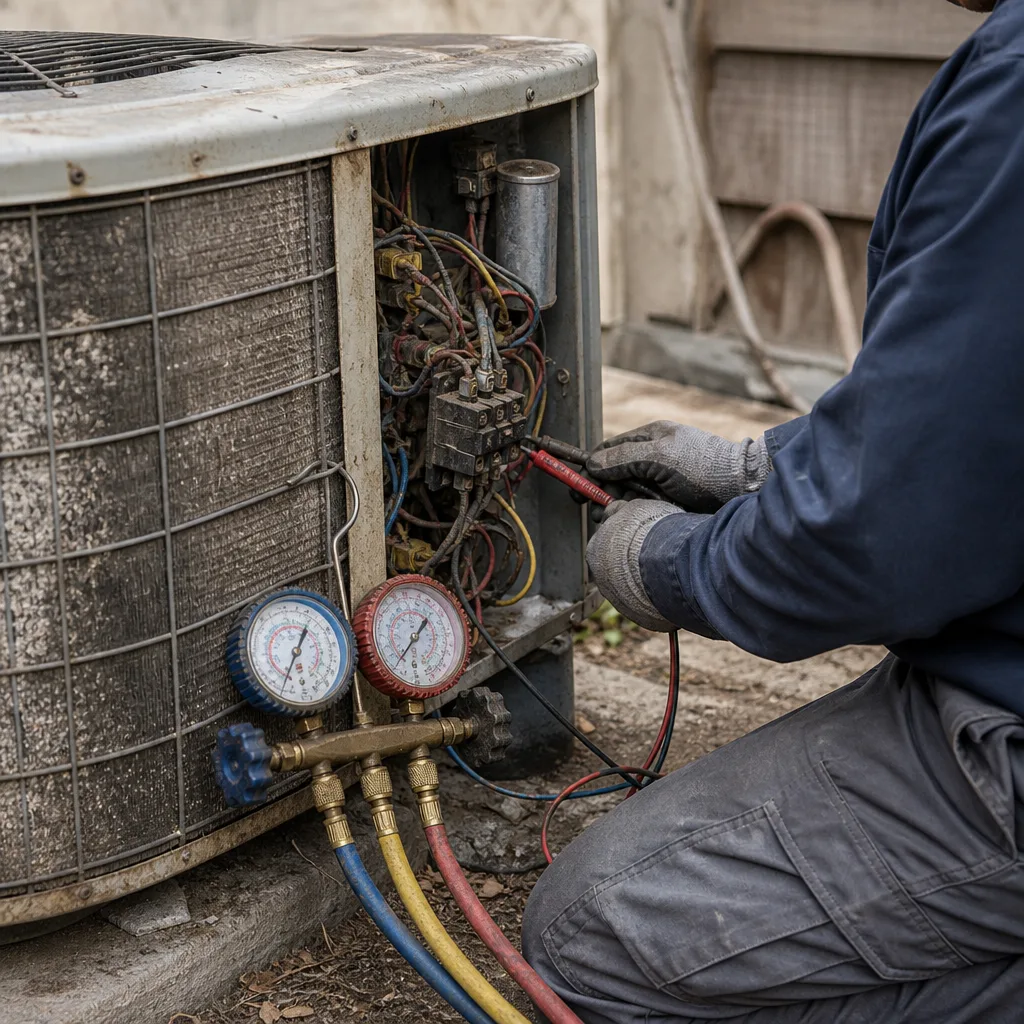 Before
 After
 Before
 After
 Before
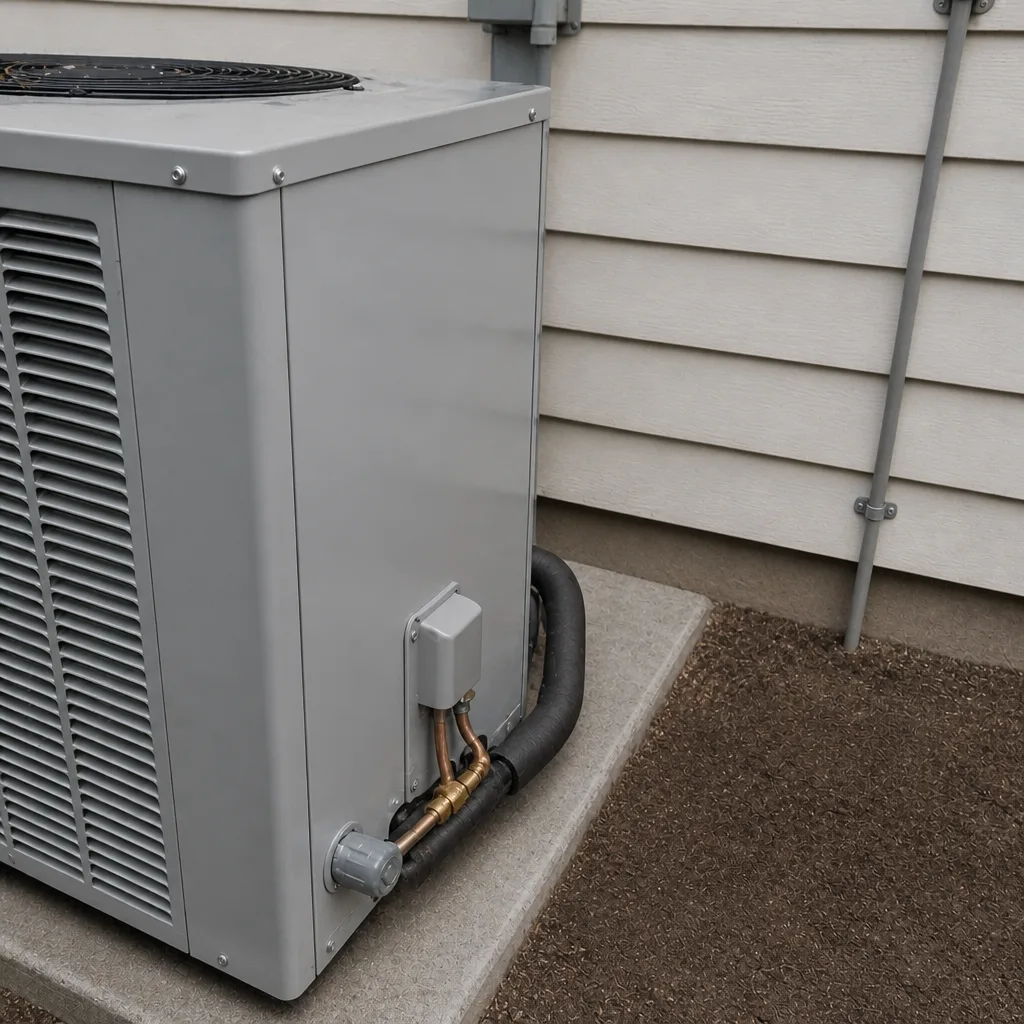 After
When to Call a Professional
Call a professional when the system won’t cool or heat and you’ve already checked the thermostat, the breaker, and the filter. Call immediately if you smell gas or burning, see ice on the refrigerant lines, hear a hum without a start, or see the breaker trip more than once. Call for anyone in the home with a heat- or cold-sensitive medical condition, or a baby. And call when the system is running but the temperature inside is climbing past 85°F, or dropping below 60°F. AC Repair San Mateo offers free estimates in San Mateo. Call (866) 260-3183 to book a technician. We answer 24/7, and dispatch runs from 7am to 7pm, Sunday through Friday.
Frequently Asked Questions
Turn the system off at the thermostat and check the breaker, the filter, and the thermostat setting. Don’t reset a breaker that trips immediately, and don’t try to run a system with a frosted coil. Then call a specialist. Homes that reach a technician early are the ones who get same-day service when the rest of San Mateo is calling in. Call (866) 260-3183 for a free estimate.
Response times depend on how many other calls are out and whether the system has failed completely or partially. During a Diablo wind heat event, most contractors book up within a couple of hours. Established customers and homeowners with documented systems typically get same-day service; homes calling cold often wait days. We answer 24/7 and dispatch from 7am to 7pm, Sunday through Friday. Call (866) 260-3183 to book.
Yes, if you use the marine layer and overnight cooling, and know when to stop relying on them. Open windows at night, close them during the day, and use fans for airflow. If the outdoor temperature stays above 90°F and the fog isn’t arriving, close everything up and stay in the coolest room in the house. If anyone in the home is heat-sensitive, don’t wait; call for service. Call (866) 260-3183 for an exact estimate.
Repair is usually the right answer when the failure is a component (igniter, flame sensor, inducer motor, pressure switch, control board) and the furnace is in reasonable condition. Replacement makes more sense if the heat exchanger is cracked or the furnace is at the end of its service life. A technician should show you the failed part and explain the reasoning before recommending anything. Call (866) 260-3183 for a free, honest assessment.
Yes. Heat pumps that limp through a mild San Mateo summer often fail on the first real heat day of a Diablo wind event because the compressor runs harder and longer than usual, exposing a marginal capacitor, low refrigerant, or failing fan motor. A spring checkup catches most of these before the heat arrives. If the system has already failed, book early; same-day is realistic but only if you’re on the queue. Call (866) 260-3183 for an exact estimate.
There shouldn’t be a markup that isn’t explained. The written estimate sets the price, and the free estimate means there’s no reason to guess. Ask for it before any work begins, and ask what the price covers. Reputable companies will spell it out. Call (866) 260-3183 for a free estimate and a written price.
The Bottom Line
Two scenarios drive nearly every HVAC emergency in San Mateo: a heat pump failure during a Diablo wind heat event and a heating system outage during a coastal cold snap. The difference between a 4-hour and a 48-hour resolution usually comes down to decisions made in the first 30 minutes. Document your system now, triage fast if something fails, know when the marine layer actually helps, and understand what emergency service means in the local market. We work on the brand you already have, not just the ones we sell. Heating and cooling is all we do. When a system fails, one call covers your furnace and your AC, and no juggling contractors. Call (866) 260-3183. We answer 24/7, and fast dispatch from 7am to 7pm covers every call across the Peninsula.
Written by the team at AC Repair San Mateo.